
• (770) 300-0011
  • Contact
American Elevator
  • Elevators
    • Traditional Home Elevators
      • Hydraulic
      • Inline Gear Drive
    • Luxury Home Elevators
      • Symmetry Dream
      • Cibes Air
      • Antera
      • Glass Elevators
    • Home Accessibility Elevators
    • Small Footprint Home Elevators
      • Cibes Ascenda
      • Shaftless Elevators
    • Elevator Doors
    • Commercial Elevators
      • Dumbwaiters
      • LULAs
  • Lifts
    • Stairlifts
      • Straight
      • Curved
    • Wheelchair Lifts
      • Vertical Platform Lift
        • Cibes Primo
      • Inclined Platform Lift
  • Maintenance & Repairs
  • Gallery
  • Resources
    • Architect & Builder Information
    • Brochures & Design Guides
  • About
    • Areas We Serve
      • Georgia
        • Suwanee
      • North Carolina
      • South Carolina
    • Testimonials
    • Blog
  • Menu Menu

How a Home Elevator for Aging in Place Keeps Georgia Families at Home

Maybe it’s a parent who’s started avoiding the upstairs bedroom, or maybe it’s you, thinking a few steps ahead of your own knees. Either way, the conversation about a home elevator for aging in place usually starts with someone who loves their home and doesn’t want to leave it. Learn why a home elevator has become one of the most effective ways Georgia families solve that problem, what it actually looks like next to other options, and what both homeowners and adult children should know before making a decision.
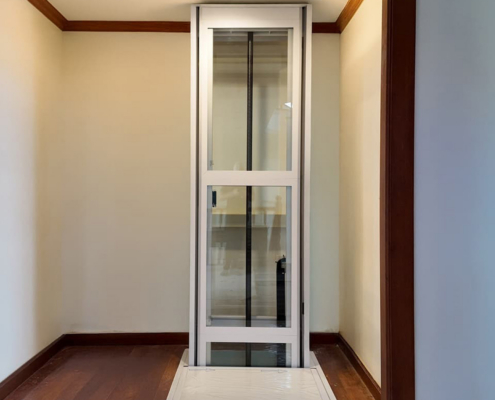

Why More Georgia Families Choose a Home Elevator for Aging in Place

The desire to stay put runs deep, and it’s backed by more than sentiment. National research from AARP found that roughly three in four adults over 50 want to remain in their current home for as long as possible, and multi-level houses across Georgia’s established neighborhoods are exactly the kind of homes people are trying to stay in.

The Case for Staying in a Multi-Level Home

A two-story or split-level home often holds decades of history, with a primary bedroom on the second floor, a finished basement, and layout built around a life that’s already happened there. Moving away from that layout can be hard, and many older adults describe their home as central to their sense of independence and identity. A home accessibility elevator solves the actual problem, limited access to certain floors, without forcing a family to give up everything else about the home they’ve built.

Weighing the Cost of Moving vs. Modifying

Downsizing to a single-story home means a new mortgage, real estate fees, and the disruption of relocating a lifetime of belongings, often in a market where single-story homes carry a premium. A home elevator, by comparison, is a one-time investment that solves the mobility problem while the rest of the home and the memories stay exactly the same. For many families, the math ends up favoring the elevator once moving costs are honestly accounted for.

Why a Home Elevator for Seniors Makes Practical Sense

Beyond the emotional case, there’s a straightforward safety argument. Stairs are one of the most common places for falls among older adults, and that risk only grows as balance, vision, and joint mobility change with age. A home elevator for seniors removes the daily risk entirely rather than managing around it with handrails or reminders to go slow, and it does so without requiring anyone to change their habits or remember new precautions during a tired evening or a rushed morning.

How a Home Accessibility Elevator Compares to Other Aging in Place Home Modifications

Grab bars, non-slip flooring, and wider doorways all show up on standard aging in place home modifications checklists, and each one has a place. But they solve different problems than a multi-floor access issue does, and it’s worth understanding where each option actually fits.

Stair Lifts and Ramps

A stair lift is often the fastest and lowest-cost way to restore access between two floors, and it works well for someone who can still transfer in and out of a seat comfortably. A wheelchair lift serves a related but distinct need, providing platform-based access for someone using a wheelchair or scooter rather than a seated rail system. Both are worth considering, particularly as a faster or lower-cost first step.

Where a Home Elevator Wins

An elevator is the only option that gives full, standing-room access to every floor, which matters for someone who also needs to move furniture, luggage, or a walker between levels rather than just themselves. It’s also the option that scales gracefully as mobility needs change over years, rather than requiring a second modification down the road. For families planning years ahead rather than reacting to a single event, that flexibility tends to matter more than the upfront cost difference between these approaches.

American Elevator’s home accessibility elevators are built around long-term independence, with in-house, state-licensed technicians handling the entire installation.

Learn More

Retrofitting an Existing Georgia Home for a Home Elevator

One of the biggest hesitations homeowners have is assuming their existing house simply can’t accommodate an elevator without a major renovation. In most cases, that assumption doesn’t hold up once a licensed technician actually evaluates the space. A small-footprint elevator can often fit into a closet stack, a corner of a stairwell, or another compact area without reworking the home’s structure.

For older homes throughout Georgia’s established suburbs, where floor plans weren’t originally designed with an elevator in mind, this retrofit path is usually far more achievable than homeowners expect going in.

What Adult Children Should Know as They Plan Ahead

For adult children, this conversation often starts after a fall, a diagnosis, or a hospital stay rather than as calm long-term planning. Starting earlier changes the entire experience, both for the parent and for the family managing it.

Starting the Conversation Early

Bringing up an elevator for elderly parents before there’s a crisis gives everyone more room to plan, compare options, and involve the parent in decisions about their own home. It also means the installation itself, which typically takes a matter of weeks once permits and design are finalized, happens on a comfortable timeline instead of an emergency one.

What This Means Long-Term for the Whole Family

An elevator installed today supports whoever lives in that home for years afterward, whether that’s an aging parent, a future owner with different mobility needs, or the same family as everyone gets older together. Ongoing maintenance and service keeps the system reliable over that entire span, which matters more for a mobility device than almost any other home system. Georgia requires annual maintenance visits for elevator systems, so this isn’t optional upkeep. It’s part of what keeps a home elevator for aging in place working the way it’s supposed to for the long run.

Georgia-Specific Considerations for Aging in Place

A home elevator installed in Georgia goes through the same state inspection and licensing requirements as any other elevator in the state. Working with a company licensed across Georgia, South Carolina, and North Carolina means the permitting, inspection, and long-term compliance side of the project is handled by people who do this work every day. That local familiarity tends to matter most for aging-in-place projects specifically, since these installations often move on a tighter emotional timeline than a standard home renovation.

Start Planning Your Home Elevator for Aging in Place

A home elevator for aging in place is about preserving a life already built in a home worth staying in. American Elevator has supported families across Georgia, South Carolina, and North Carolina with in-house, state-licensed installation since 1997, and that same standard applies whether the goal is a full renovation or a straightforward retrofit for aging parents.

Our team can walk through your specific home and your family’s timeline together, so the plan fits your situation. Reach out to start that conversation before it becomes urgent.

Share This Post

  • Share on Facebook
  • Share on X
  • Share on Pinterest
  • Share on LinkedIn
  • Share on Tumblr
  • Share on Vk
  • Share on Reddit
  • Share by Mail

More Like This

Ascenda Home Elevator In Hallway

Residential Elevator Specifications for Architects and Builders

Home Elevators
https://www.aelevator.com/wp-content/uploads/2026/10/Ascenda-Home-Elevator-in-hallway.jpg 1250 2000 Abstrakt Marketing /wp-content/uploads/2026/01/ae-logo-color.png Abstrakt Marketing2026-10-06 13:54:332026-10-06 13:54:39Residential Elevator Specifications for Architects and Builders
Antera Home Elevator In Mountain Home

What to Expect During Your Home Elevator Installation Process

Home Elevators
https://www.aelevator.com/wp-content/uploads/2026/10/Antera-Home-Elevator-in-mountain-home.jpg 1250 2000 Abstrakt Marketing /wp-content/uploads/2026/01/ae-logo-color.png Abstrakt Marketing2026-10-06 12:47:332026-10-06 12:47:40What to Expect During Your Home Elevator Installation Process

Categories

  • Home Elevators

Location

Address
4177 Suwanee Dam Rd NW
Suwanee, GA 30024

7015 Wells Hwy SUITE B
Seneca, SC 29678

Get In Touch

Phone

Suwanee: (770) 300-0011

Seneca: (864) 985-0555

Email
[email protected]

[email protected]

Services

Elevator Installation

Lift Installation

Service and Maintenance

About Us

American Elevator provides home elevators, lifts, and service you can trust.

Website by Abstrakt Marketing Group ©
  • Sitemap
  • Privacy Policy
Link to: What to Expect During Your Home Elevator Installation Process Link to: What to Expect During Your Home Elevator Installation Process What to Expect During Your Home Elevator Installation ProcessAntera Home Elevator In Mountain Home Link to: Residential Elevator Specifications for Architects and Builders Link to: Residential Elevator Specifications for Architects and Builders Ascenda Home Elevator In HallwayResidential Elevator Specifications for Architects and Builders
Scroll to top Scroll to top Scroll to top

This site uses cookies. By continuing to browse the site, you are agreeing to our use of cookies.

AcceptLearn more

Cookie and Privacy Settings


How we use cookies

We may request cookies to be set on your device. We use cookies to let us know when you visit our websites, how you interact with us, to enrich your user experience, and to customize your relationship with our website.

Click on the different category headings to find out more. You can also change some of your preferences. Note that blocking some types of cookies may impact your experience on our websites and the services we are able to offer.

Essential Website Cookies

These cookies are strictly necessary to provide you with services available through our website and to use some of its features.

Because these cookies are strictly necessary to deliver the website, refusing them will have impact how our site functions. You always can block or delete cookies by changing your browser settings and force blocking all cookies on this website. But this will always prompt you to accept/refuse cookies when revisiting our site.

We fully respect if you want to refuse cookies but to avoid asking you again and again kindly allow us to store a cookie for that. You are free to opt out any time or opt in for other cookies to get a better experience. If you refuse cookies we will remove all set cookies in our domain.

We provide you with a list of stored cookies on your computer in our domain so you can check what we stored. Due to security reasons we are not able to show or modify cookies from other domains. You can check these in your browser security settings.

Other external services

We also use different external services like Google Webfonts, Google Maps, and external Video providers. Since these providers may collect personal data like your IP address we allow you to block them here. Please be aware that this might heavily reduce the functionality and appearance of our site. Changes will take effect once you reload the page.

Google Webfont Settings:

Google Map Settings:

Google reCaptcha Settings:

Vimeo and Youtube video embeds:

Accept settingsHide notification only